How to Avoid Airline Baggage Fees: 9 Smart Strategies That Actually Work
Learning how to avoid airline baggage fees starts with one simple decision: pack lighter and choose the right fare. Checked bags now cost $35 to $40 each way on most major U.S. carriers, so a single round trip with one checked bag can add $70 to $80 to your ticket. Meanwhile, budget carriers like Frontier and Spirit charge for everything, including carry-ons in some cases.
The good news? You can dodge most of these charges. Airlines leave plenty of legal loopholes, from personal item allowances to credit card perks. In this guide, you’ll learn exactly which strategies work in 2025, which airlines still offer free checked bags, and how to pack so you never check a bag again.
I’ve flown more than 400 segments across 30-plus airlines, from Ryanstone-basic European budget flights to long-haul international routes. Along the way, I’ve tested every trick below. Some save you $30. Others save you $400 a year. Let’s dig in.
Why Airlines Charge Baggage Fees (and Why They Keep Rising)
First, a quick backstory. U.S. airlines introduced first-checked-bag fees in 2008, when fuel prices spiked after the financial crisis. American Airlines led the charge. Within months, nearly every major carrier followed. Fuel prices eventually dropped, but the fees stayed. In fact, they climbed.
Today, baggage and change fees generate more than $33 billion a year for global airlines, according to industry reports. That’s pure ancillary revenue — money collected beyond the base fare. For budget carriers, fees often exceed the ticket price itself.
So why do airlines rely on this model? Because fare-comparison sites like Google Flights display only the base fare. A $49 Spirit flight looks cheaper than a $79 Delta flight, even though the Delta fare includes a carry-on and the Spirit fare does not. Consequently, airlines can advertise low fares while collecting fees afterward. Once you understand this, every strategy below makes sense.
How to Avoid Airline Baggage Fees: The 9 Best Strategies

1. Master the Personal Item Allowance
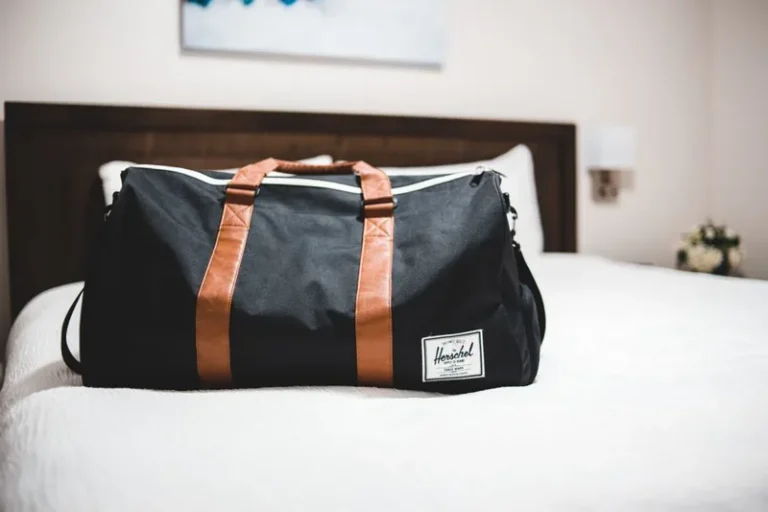
Every airline — yes, even Spirit and Frontier — allows one free personal item. That’s a bag that fits under the seat in front of you. Typically, the size limit runs around 18 x 14 x 8 inches, though it varies by carrier.
A well-designed personal item can hold a week’s worth of clothes. Use packing cubes, roll your clothes, and wear your bulkiest items (jacket, boots, jeans) on the plane. Some travelers swear by 35-liter travel backpacks that compress to fit the sizer. I’ve done ten-day trips through Portugal with nothing but a compliant personal item.
Check your airline’s exact dimensions before you fly, though. Gate agents at Spirit and Frontier measure bags aggressively because bag fees drive their profits.
2. Book Fares That Include Bags
Not all fares treat bags equally. Before you book, compare the total cost, not the sticker price. Here’s how major carriers compare on bag policies:
| Airline | Personal Item | Carry-On Bag | First Checked Bag (Typical) |
|---|---|---|---|
| Southwest | Free | Free | 2 free checked bags |
| Delta | Free | Free | $35 (Main Cabin) |
| United | Free | Free | $40 (unless paid online discount) |
| JetBlue | Free | Free on most fares | $35–$45 |
| Alaska | Free | Free | $35 |
| Frontier | Free | $55–$80 unless bundled | $50–$75 |
| Spirit | Free | $40–$65 unless bundled | $40–$65 |
Southwest remains the outlier: two free checked bags on every fare, no fine print. For family trips with bulky gear, that policy alone can save $280 round trip.
3. Pay for Bags Online, Never at the Airport
If you must check a bag, always prepay during online check-in. Airlines charge their highest rates at the airport counter. For example, Spirit might charge $40 for a checked bag online but $65 at the gate. Frontier’s airport rates run similarly higher.
Additionally, some airlines, like United, discount the first checked bag by $5 to $10 when you pay in advance online. Set a reminder to check in exactly 24 hours before departure, and handle bag payment then.
4. Get an Airline Credit Card (If You Fly Often)
Airline co-branded credit cards often include a free first checked bag for the cardholder and companions on the same reservation. The Delta SkyMiles Gold American Express Card, for instance, waives the first checked bag for you and up to eight companions. For a couple flying four round trips a year, that perk saves roughly $560 — far more than the card’s annual fee.
Similarly, the United Explorer Card and Alaska Airlines Visa Signature Card offer free checked bags. Read the terms carefully, though. The benefit usually applies only to flights booked with that airline, not partner carriers.
5. Use Airline Elite Status or Oneworld/Star Alliance Perks
Loyalty status still pays. Delta, United, and American all offer free checked bags to elite members, and many extend the perk to companions. Even mid-tier status — like American’s AAdvantage Gold — includes a free first checked bag.
You don’t need to fly constantly to earn status anymore, either. Status-match challenges, co-branded credit card spending, and programs like Alaska’s Mileage Plan make tiers reachable for moderate travelers. If you fly one airline repeatedly, the math works out quickly.
6. Fly Premium Economy or Business on Long-Haul Routes
On international flights, premium cabins usually include two free checked bags. Sometimes premium economy costs only $100 to $200 more than economy — and that fare bump includes a checked bag worth $100 round trip, plus extra legroom, better meals, and priority boarding.
For example, on many transatlantic routes to Europe, a $120 premium economy upgrade beats paying $120 in bag fees and getting nothing else. Do the math before you book. Compare the total, all-in price of each cabin.
7. Ship Your Luggage Ahead
For heavy or bulky items, shipping sometimes wins. Ground shipping a 40-pound box across the U.S. costs $40 to $80 via USPS, UPS, or FedEx. Meanwhile, airline excess-weight fees start at $100 and rise fast.
This strategy works best for ski trips, golf travel, or relocations. Services like ShipGo and Luggo specialize in door-to-door luggage shipping. However, for standard trips, airline baggage usually costs less — shipping shines only when your bags exceed 50 pounds or contain awkward gear.
8. Wear Your Extra Clothing and Use Jacket Pockets
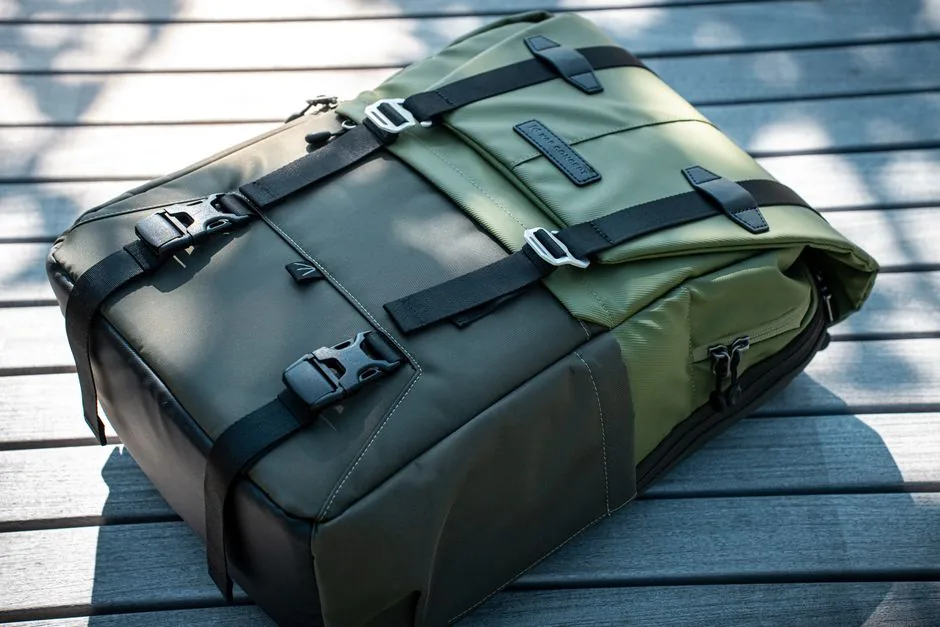
This old trick still works. Wear your heaviest shoes, jacket, and sweater through security. Once on board, stow the jacket in the overhead bin — nobody weighs clothing.
Travel vests with multiple pockets take this further. A Rufus Roo or Scottevest carries books, chargers, snacks, and even shoes. Budget carriers like easyJet in Europe explicitly allow jackets without counting pockets. U.S. carriers rarely challenge a reasonable layering strategy, so use common sense and don’t turn your jacket into a duffel bag.
9. Pack Smarter With the Right Luggage
The right bag solves half the problem. A carry-on that measures 22 x 14 x 9 inches fits every major U.S. sizer. Compression packing cubes, vacuum bags, and merino wool clothing (which you can wear multiple times) stretch that space dramatically.
Before your next trip, review our guides on choosing the best carry-on luggage and the classic hard vs. soft luggage debate. The right shell, wheels, and dimensions can mean the difference between sailing through boarding and paying a surprise gate-check fee.
Airline Baggage Fees by Airline: What to Expect in 2025
Fees change often, so always verify on your airline’s website before booking. That said, here’s the current landscape in plain terms.
Major U.S. carriers — Delta, United, American — now charge $35 to $40 for the first checked bag on domestic flights. JetBlue and Alaska charge similar amounts. Southwest remains the only holdout with two free checked bags, though the airline has signaled future changes to this policy, so confirm before you book.
Budget carriers flip the model. Frontier and Spirit charge for carry-ons but not personal items. Their fees also vary by route and demand, so a carry-on on a busy Friday flight can cost double the same bag on a Tuesday.
Internationally, most long-haul fares include at least one checked bag. Transatlantic economy tickets on Delta, British Airways, and Lufthansa typically include one bag. However, basic economy fares on transatlantic routes increasingly exclude checked luggage, so read the fare rules carefully.
Common Mistakes That Trigger Baggage Fees
Even savvy travelers get caught. Watch out for these traps:
- Gate-checking oversized carry-ons. If your bag doesn’t fit the sizer, gate agents charge you — sometimes at the highest rate. Measure at home, not at the gate.
- Booking basic economy blindly. Basic economy fares on United and American sometimes prohibit full-size carry-ons on select routes.
- Forgetting the return leg. Prepaid bag fees usually apply one way only. Your return flight needs a separate payment.
- Overweight bags. Bags over 50 pounds trigger fees up to $100, even when the bag itself was free. Use a luggage scale at home.
- Assuming status applies to companions. Some carriers limit free bag perks to the cardholder alone. Check the rules for your companion before the airport.
Packing Checklist: Fit a Week Into a Carry-On
Ready to ditch checked bags for good? Follow this checklist:
- Choose a 40-liter carry-on that meets airline size limits.
- Pack merino wool clothing you can re-wear.
- Use compression cubes to cut volume by 30%.
- Limit shoes to two pairs — wear the heavier one.
- Fill every pocket and dead space (socks inside shoes, chargers in corners).
- Buy toiletries at your destination to skip liquid limits.
- Do laundry mid-trip for trips longer than a week.
For longer international journeys, our guide to the best luggage for international travel covers size requirements for foreign carriers, which often run smaller than U.S. standards.
Frequently Asked Questions
Which airlines still offer free checked bags?
Southwest offers two free checked bags on all fares, though its policy may evolve. Otherwise, free checked bags typically come through elite status, airline credit cards, premium cabin tickets, or most international long-haul fares. No other major U.S. carrier includes free first checked bags on standard domestic economy tickets.
Can I bring a carry-on and a personal item for free?
Yes, on most full-service carriers. Delta, United, American, Alaska, and JetBlue allow one carry-on plus one personal item at no charge on standard fares. However, basic economy fares on select routes and budget carriers like Spirit and Frontier charge for carry-ons. Personal items stay free across the board.
How much do baggage fees usually cost?
For domestic U.S. flights, expect $35 to $40 each way for the first checked bag, $45 for the second, and $150-plus for a third. Overweight bags (over 50 pounds) add $100 to $200. Budget carriers charge more for carry-ons booked last-minute, sometimes $65 to $80 at the gate.
Is it cheaper to pay for bags online or at the airport?
Online, almost always. Most airlines discount prepaid bags by $5 to $10, and budget carriers charge dramatically less online than at the counter or gate. Spirit, for example, can charge nearly double at the airport. Pay during online check-in, which opens 24 hours before departure.
Do airline credit cards really save money on bags?
For frequent flyers, yes. A card with a free checked bag perk saves $70 to $80 per round trip. If you fly with a companion twice a year, the savings reach $280 to $320 — enough to justify a $95 to $150 annual fee. Infrequent travelers should skip the card and pack lighter instead.
Final Thoughts: Pack Smarter, Pay Less
Baggage fees won’t disappear anytime soon. Fortunately, you now hold every tool to beat them. Pack into a personal item when possible. Compare all-in fares before booking. Prepay if you must check a bag. And stack perks like credit cards and elite status if you fly often.
Start with your next trip. Pull out your carry-on, run through the packing checklist above, and watch a $70 fee vanish from your travel budget. For more gear guidance, browse our reviews of the best carry-on luggage before your next booking.
Want more money-saving travel tips like these? Explore more of Staylora’s trip planning guides — and check the U.S. Department of Transportation’s airline customer service dashboard for the latest official fee policies before you fly.